
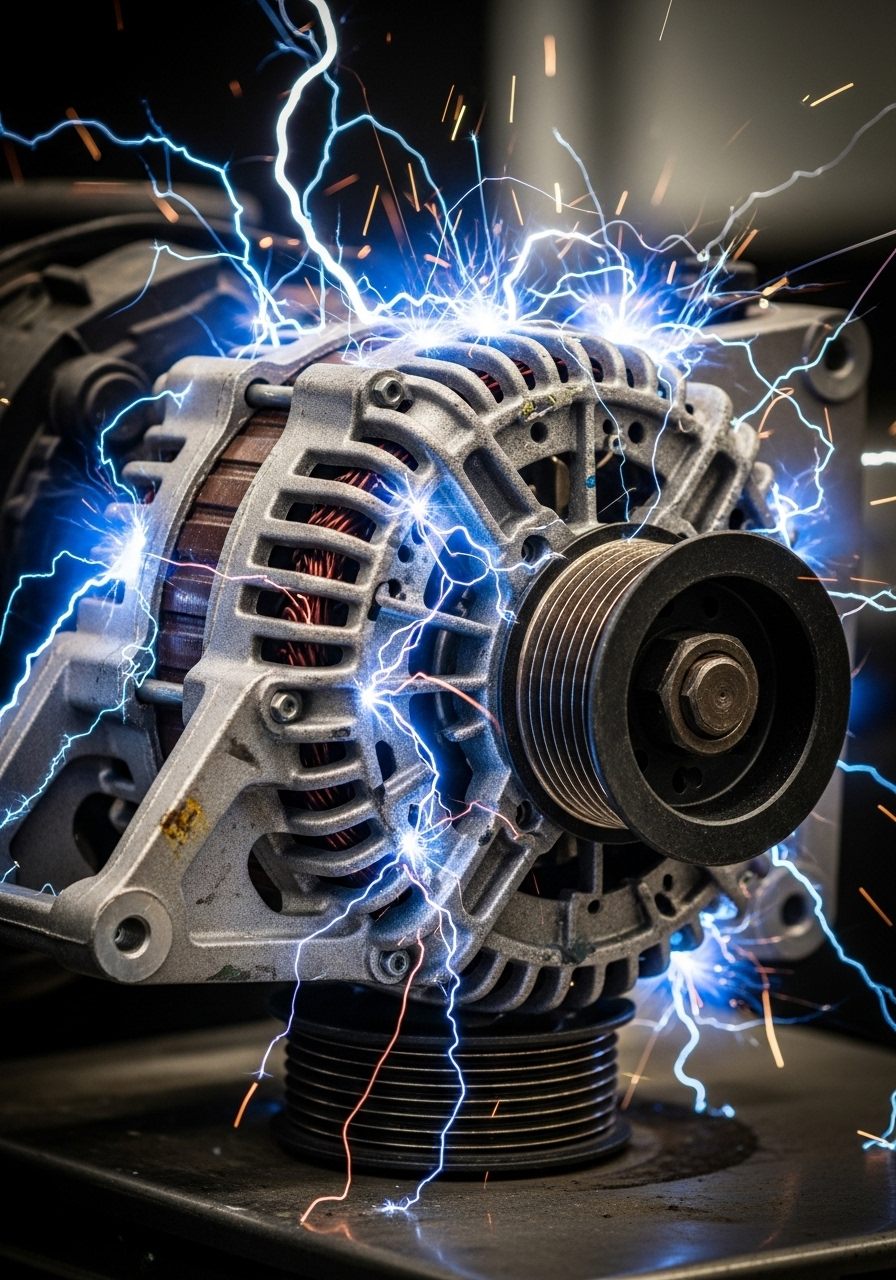
The battery-shaped warning light is one of the most misunderstood lights on the dashboard. It rarely means the battery itself is bad. It usually means the charging system is not supplying the voltage it should, so the car is running on whatever is left in the battery.
What to do straight away
- Switch off what you don’t need: air conditioning, heated seats, the radio and phone chargers. Everything electrical is now running on the battery.
- Watch the temperature gauge. On many engines the same drive belt turns both the alternator and the water pump. If the belt has snapped, the engine can overheat quickly.
- Head somewhere safe, such as home, work or a secure parking area. Avoid switching the engine off on the way, because it may not restart.
If the temperature gauge climbs, a red engine warning appears, or you smell burning, stop as soon as it is safe and switch off. Do not keep driving an overheating engine.
Other signs of a charging problem
The light is not always the first warning. Look out for:
- Headlights or dashboard lights that dim, brighten or flicker with engine speed.
- A whining or grinding noise from the front of the engine.
- A squeal on start-up or a burning rubber smell, which can mean a slipping belt.
- A battery that keeps going flat, even after it has been replaced.
- Electrical features behaving oddly, such as electric windows slowing down.
What usually causes it
The most common causes are a worn alternator, a broken or slipping drive belt, and poor connections or earth straps between the alternator, battery and body. Less often the fault is in the wiring of the warning light itself. Each has a different fix, which is why it is worth testing before replacing parts.
How a charging fault is confirmed
A proper check measures the battery voltage with the engine off and again with the engine running, then repeats the test with lights and other loads switched on to see whether the alternator keeps up. The belt, the main cables and the earth connections are checked too. Many newer cars use “smart” charging, where the voltage varies on purpose, so the readings have to be judged against how that vehicle is designed to behave.
Replacing only the battery will not fix a charging fault. The new battery simply goes flat as well, and you are back where you started with less money in your pocket.
Repair or replace the alternator?
Depending on what has failed, some alternators can be repaired, for example a worn voltage regulator, brushes or bearings, while others are better replaced. Once the fault is confirmed, we explain the options and what each involves before any work goes ahead.
Battery light on in Kempton Park?
We test the battery, alternator, belt and connections at your vehicle. If the car is still running, get it somewhere safe and send us the make, model and year and what you noticed. See our starting and charging service, or read about a battery that keeps going flat.
Next step
Need help in Kempton Park? See our starting & charging faults service or send your vehicle details to arrange a mobile assessment.