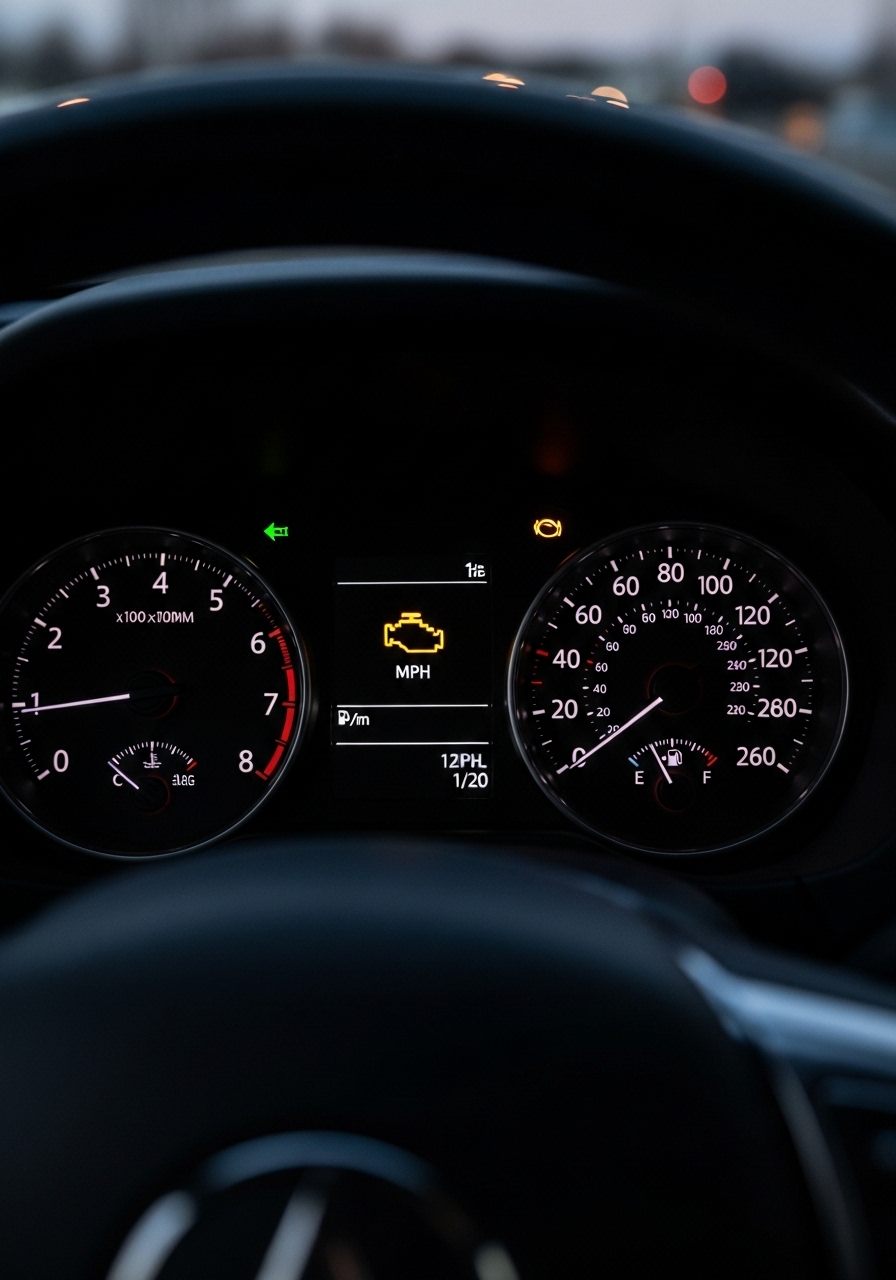
The check engine light (also called the engine management light) means the engine control system has detected something outside its normal range. It might be minor, it might be serious, and the light alone cannot tell you which. Here is how to read the situation and what a proper diagnostic adds.
Steady or flashing?
A steady light means a fault has been stored. The car may drive normally, but it should be checked soon, because a small fault can lead to bigger damage or higher fuel use.
A flashing light usually means a serious misfire. Unburnt fuel can overheat and damage the catalytic converter, which is an expensive part. Reduce speed, avoid hard acceleration and get the car checked as soon as possible.
Red warning lights are different. If the oil pressure or engine temperature warning comes on, stop as soon as it is safe and switch off the engine. Driving on can destroy the engine.
What a fault code can and cannot tell you
When the light comes on, a fault code is stored. A code tells you which system or reading is out of range. It does not tell you which part to replace. For example:
- An oxygen-sensor code can be caused by an exhaust leak, a wiring fault or a fuel-mixture problem, not just a bad sensor.
- A misfire on one cylinder could be a spark plug, an ignition coil, an injector or the wiring to any of them.
- A sensor “circuit” code often points to a wire or connector rather than the sensor itself.
Four myths that cost drivers money
“The scan tells you which part to replace.” It tells you where to start testing. Replacing the part named in a code without testing is how drivers end up buying parts they did not need.
“Clearing the code fixes it.” Clearing switches the light off, not the fault. It also deletes the freeze-frame data recorded when the fault happened, which is useful for diagnosis. If the cause is still there, the light comes back.
“A cheap code reader is a full diagnostic.” Basic readers usually see generic engine codes. They often cannot see ABS, airbag, gearbox or body systems, live data or manufacturer-specific codes.
“If it drives fine, it can wait.” Some faults really are minor. Others, such as a misfire or a cooling problem, cause expensive damage while the car still feels normal.
What a proper diagnostic includes
- A scan of the vehicle systems the make and model allow.
- Freeze-frame and live data, so readings can be checked while the engine runs.
- Testing of the sensors, wiring and connectors linked to the fault.
- A clear explanation of what was found, and the repair options, before any work is authorised.
When the light comes on, take a photo of the dashboard and note what was happening: a cold start, accelerating, idling, after filling up. On some cars a fuel cap that was not closed properly after refuelling can trigger a fault code, so check that too.
Engine light on in Kempton Park?
We bring diagnostic equipment to your vehicle, scan and test the systems involved and explain the results in plain language. Send us a photo of the warning light, the make, model and year and when the light came on. See our mobile car diagnostics service. If the car will not start at all, read car won’t start, just clicking.
Next step
Need help in Kempton Park? See our vehicle diagnostics service or send your vehicle details to arrange a mobile assessment.
Share this guide