
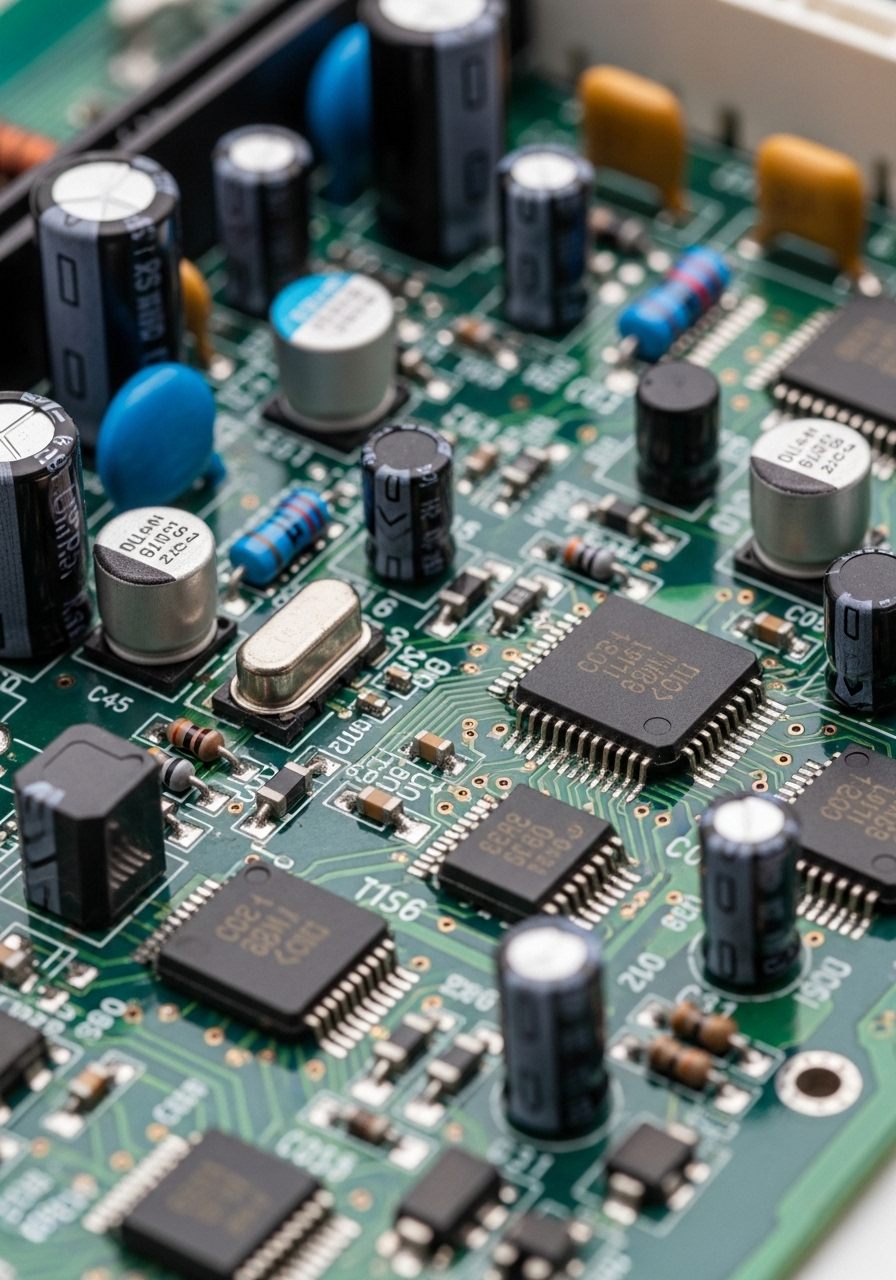
The engine control unit, or ECU (often called the “computer box”), is one of the most expensive electronic parts on a car. It is also one of the most wrongly blamed. Before anyone replaces it, it is worth understanding why an ECU can look faulty when it is not.
What the ECU does
The ECU reads information from sensors around the engine and controls fuel injection, ignition and many other functions. On most modern vehicles it also talks to other control modules, such as the immobiliser, gearbox and ABS, over a data network. If its power supply, earth, sensor signals or network connection is disturbed, the symptoms can look exactly like a failed ECU.
Why the ECU gets blamed
Typical symptoms that lead people to suspect the ECU include:
- The engine cranks but will not start.
- Several warning lights come on at once.
- A diagnostic tool cannot communicate with the engine system.
- Fault codes mentioning the control module or “communication”.
Each of these can be caused by something much simpler: low battery voltage, a poor earth connection, a blown fuse, a corroded connector, a damaged wire or a faulty sensor pulling down a shared supply. A fault code that mentions the ECU does not prove the ECU has failed.
The checks that should come first
- Battery condition and charging voltage.
- The ECU’s power supply and earth circuits, tested under load.
- Fuses and relays that feed the engine management system.
- Connectors and pins, looking for corrosion, water and bent terminals.
- The data network wiring between modules.
- Sensor supply circuits that several sensors share.
- A scan of all the systems the vehicle allows, not only the engine.
Tell us the history. A recent jump-start, an engine wash, water in the footwell, an accident repair or new accessories fitted are all clues that point the testing in the right direction.
When the ECU really is faulty
ECUs do fail. Water damage, overheated driver circuits, cracked solder joints and damage from voltage spikes are all real. When testing confirms the unit itself is at fault, the options are usually to repair the existing ECU or to replace it with a new or used unit.
Repairing the original unit has one big advantage: it keeps the vehicle’s own software and immobiliser data. A replacement unit usually has to be coded or matched to the vehicle before the engine will run.
A second-hand ECU bought online is rarely plug-and-play. If the part number, software or immobiliser data do not match, the car may still not start, and the money is spent. Check before you buy.
What an ECU assessment looks like
We start at the vehicle: scanning the systems, checking the power, earth and communication circuits and inspecting the connectors. That tells us whether the ECU is likely to be the problem. If repair work inside the unit is needed, that can require a separate repair stage, and we explain what is involved and what it costs before you decide.
ECU problems in Kempton Park?
Send us the make, model and year, the symptoms, any fault codes you have been given and anything that happened just before the problem started. See our ECU testing and repair service, and read how to protect your car’s ECU so it does not happen again.
Next step
Need help in Kempton Park? See our ecu testing & repair service or send your vehicle details to arrange a mobile assessment.