
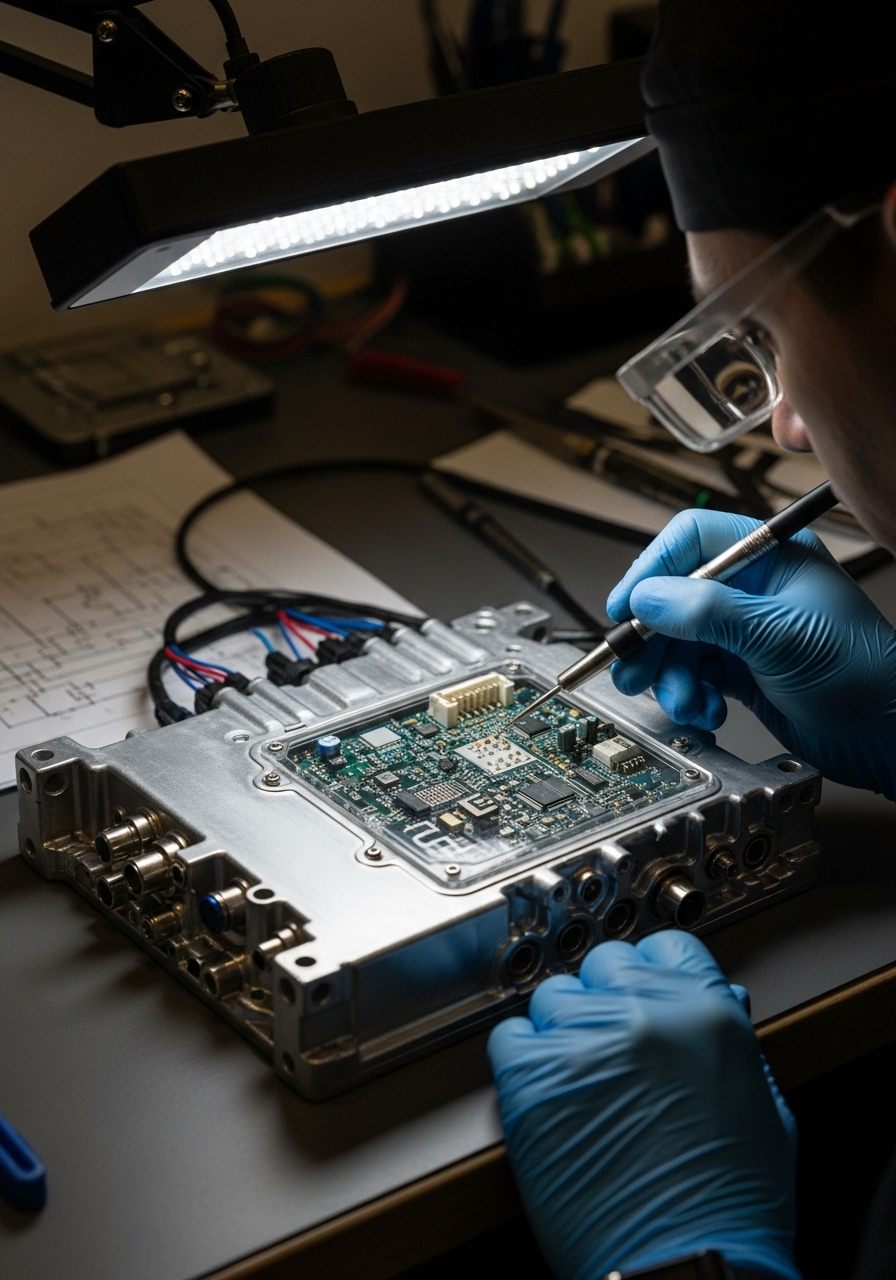
Modern vehicles rely on a network of control modules: the engine ECU, the immobiliser, the gearbox controller, the body computer and more. Most of the damage we see to them is avoidable. These habits lower the risk of an expensive electronic repair.
1. Jump-start the right way
A wrong jump-start is one of the quickest ways to damage vehicle electronics. Connecting the leads the wrong way round, letting the clamps touch or disconnecting a lead while an engine is cranking can cause voltage spikes and blown fuses.
- Follow the jump-start procedure in your owner’s manual. Many cars have dedicated jump points.
- Check the polarity twice before connecting: positive to positive, and negative to the earth point the manual specifies.
- If someone offers you a jump in a parking lot, make sure the leads are connected correctly before either engine is started.
If the car needs jump-starting regularly, the battery or charging system has a fault. Get it tested rather than jumping it every week. See battery keeps going flat.
2. Keep water away from the electronics
High-pressure washing in the engine bay can force water into connectors and modules. Driving through deep water is worse. Summer storms on the Highveld can flood low-lying roads in minutes, and water can reach modules that sit low in the engine bay or under the seats and carpets.
If water has come into the footwell, from flooding, a blocked drain or a leaking seal, have the vehicle checked early. Corrosion in connectors keeps spreading after everything looks dry.
3. Protect the electronics during welding
Welding on a vehicle, for example when fitting a tow bar, a bull bar or a canopy bracket to a bakkie, can send current through the vehicle’s wiring. The battery should be disconnected and the manufacturer’s precautions followed before any welding is done.
4. Be careful with aftermarket installations
Alarms, tracking units, light bars, dash cams and sound systems often have to connect to the vehicle’s wiring. A good installation uses suitable connections and fuses. A poor one splices into whatever wire is closest, sometimes including sensor or data wiring, and causes faults that can be hard to trace months later. Use an installer you trust and keep a record of what was fitted.
5. Keep the battery healthy
Control modules need stable voltage. A weak battery can cause modules to reset, warning lights to appear and false fault codes to be stored, especially while the engine is cranking. A healthy battery and a charging system that works properly are the cheapest protection your electronics can have.
6. Don’t ignore early warnings
Flickering warning lights, gauges that drop out for a moment or a car that occasionally will not start are often early signs of a connection or wiring problem. Caught early, these are usually simpler to fix than after a module has been damaged. Read why you should test before replacing an ECU.
Concerned about your vehicle’s electronics?
We assess ECU, power supply and wiring faults at your vehicle in Kempton Park. Tell us what happened and when the symptoms started. See our ECU testing and repair service.
Next step
Need help in Kempton Park? See our ecu testing & repair service or send your vehicle details to arrange a mobile assessment.